
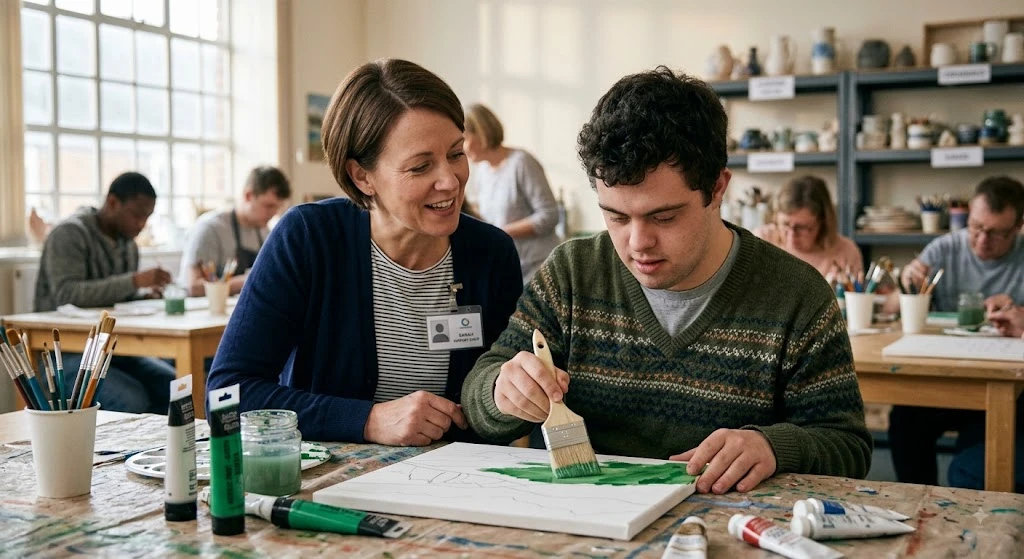
A person-centered plan becomes meaningful when it moves beyond written goals and guides what happens during ordinary parts of a person’s day. Daily supports should reflect the individual’s preferences, strengths, needs, routines, relationships, and goals while giving the person as much choice and control as possible. In Maryland, person-centered planning places the individual and their chosen circle of support at the center of the planning process.
What Makes a Person-Centered Plan Useful in Daily Life?
A useful person-centered plan connects broad goals to specific actions, settings, and supports. Instead of simply stating that someone wants to be more independent, the plan should help the support team understand what independence looks like for that person and how to support it safely.
For example, “increase community involvement” is a useful goal but not yet a daily support. A more practical approach may identify preferred places, transportation needs, communication preferences, social goals, and the amount of assistance the person wants. The team can then build these details into regular routines.
Maryland’s developmental disability system recognizes that participants, family members, friends, professionals, and other important people may contribute to planning. The individual should have a meaningful role in deciding who participates and how the planning process happens.
How Do You Translate Goals Into Daily Actions?
The first step is to break each major goal into observable actions. Ask what the person will actually do, where it will happen, what support may be needed, and how the person wants that support delivered.
Suppose a person’s goal is to prepare more of their own meals. Daily support might include choosing recipes, making a shopping list, comparing prices, gathering ingredients, using kitchen tools safely, preparing food, and cleaning up. The support worker should not automatically take over these tasks. The level of help should match what the person can do and what they want to learn.
This distinction matters because doing a task for someone can be much different from helping someone learn to do it. A person may need verbal reminders one day, hands-on assistance another day, and no assistance later.
Look For The Smallest Useful Step
Large goals can feel difficult to measure. Breaking them into smaller steps makes progress easier to see.
A goal related to employment, for instance, could involve practicing workplace greetings, following a schedule, choosing appropriate clothing, traveling to a work site, completing assigned tasks, and asking for help when needed. Each step can become part of a natural routine rather than a separate training exercise.
The person’s preferences should guide the process. If a person learns better by watching someone first, demonstration may work well. If they prefer written instructions, a simple checklist may be more useful. The same goal can require very different supports for different people.
Why Should Daily Supports Fit Natural Routines?
Daily supports work best when they are built into activities that already matter to the person. Meals, shopping, work, hobbies, appointments, household tasks, and community activities can all provide opportunities to practice skills and make choices.
A support plan should not turn every part of the day into a lesson. People need time to relax, socialize, make mistakes, change their minds, and simply enjoy their lives.
For example, grocery shopping can support budgeting, communication, transportation, decision-making, and healthy food choices at the same time. A community outing may also provide opportunities to practice navigation, social interaction, time management, and self-advocacy.
This approach helps prevent a common problem: separating “skill building” from real life. When support happens in meaningful settings, the person has a better chance to use skills outside a formal teaching session.
How Can Support Teams Balance Help And Independence?
The right amount of support is not always the maximum amount of help. Good support gives a person enough assistance to participate safely while leaving room for choice, effort, and learning.
One practical method is to use graduated support. A worker might begin with a verbal prompt, wait for the person to respond, and provide more help only if needed. Over time, the team can observe whether fewer prompts are needed.
Another important point is timing. Support should not be rushed. A person may need extra time to process a question, make a decision, communicate a preference, or complete a task. Stepping in too quickly can unintentionally reduce opportunities for independence. Effective person-centered planning looks at the supports an individual currently needs to participate successfully while continuing to identify opportunities for greater independence.
What Should Staff Document And Review?
Documentation should show what support was provided, how the person participated, and what was learned. It should not become a list of completed tasks with little information about the individual.
Useful notes can describe whether a person made a choice, completed part of an activity independently, needed a different type of prompt, expressed a new preference, or encountered a barrier. Patterns in these observations can help the team decide whether a support should continue, change, or be reduced.
Plans also need to remain flexible. A person’s interests, health needs, communication style, relationships, abilities, or living situation can change. Maryland’s person-centered planning process includes updating the plan when needs change.
Watch For Changes That Affect The Plan
Small changes can provide important information. Someone who stops participating in a favorite activity may be experiencing a transportation issue, communication barrier, change in interest, discomfort, or another concern.
After addressing any immediate health or safety concerns, the team should explore what changed and, whenever possible, ask the person directly before assuming that additional staffing or restrictions are necessary. Listening carefully can prevent a temporary problem from becoming an unnecessary long-term support.
How Can The Person Have More Choice And Control?
Choice should be part of ordinary decisions, not limited to formal planning meetings. A person can have choices about meals, clothing, activities, schedules, community destinations, household routines, and the people they spend time with.
Support teams should also pay attention to how choices are presented. Asking, “Do you want to go out?” may provide less useful information than offering two or three realistic options when the person prefers structured choices.
Self-advocacy is another important part of daily support. People can be encouraged to express preferences, ask questions, say no, request changes, and identify when they need help. These abilities support greater control over everyday life.
What Common Mistakes Can Reduce The Value Of A Plan?
One common mistake is writing goals that sound positive but are too broad to guide action. Another is creating a plan without enough input from the person who will actually use the supports.
A second problem occurs when staff focus on completing activities rather than understanding the purpose behind them. A completed shopping trip does not automatically show progress if the person had no meaningful opportunity to choose, participate, or communicate.
Teams should also avoid assuming that a person’s preferences remain unchanged. A favorite activity, routine, food, job interest, or social preference can change over time.
Finally, consistency matters. If one staff member encourages a person to make choices while another routinely makes decisions for them, the plan becomes difficult to follow. Clear communication among the support team helps turn written goals into consistent daily practice.

How Can Families And Support Teams Work Together?
Families and support professionals can contribute different types of knowledge. Family members may understand long-standing preferences, communication patterns, relationships, and personal history. Staff may notice changes in daily routines and opportunities for skill development.
The person receiving support should remain at the center of these conversations. Maryland guidance allows participants to involve family, friends, coworkers, professionals, and others who are important to them in planning.
Helpful team discussions focus on questions such as: What matters to the person now? What choices are they making? Where do they want more independence? What support is working? What is getting in the way? What should change?
These questions turn a plan into an active working document rather than something reviewed only during scheduled meetings.
People Also Ask
What Is A Person-Centered Plan?
A person-centered plan describes an individual’s goals, preferences, needs, strengths, and desired supports. It is intended to guide services around the person rather than expecting the person to fit a standard service model.
How Do You Make A Person-Centered Plan More Practical?
Connect each broad goal to specific daily activities, support levels, choices, and measurable observations. The plan should explain what meaningful participation looks like in the person’s actual life.
Who Should Be Involved In Person-Centered Planning?
The individual should be central to the process and may choose to involve family members, friends, professionals, coworkers, or other trusted people. The right team depends on the person’s preferences and circumstances.
Can A Person-Centered Plan Change?
Yes. Plans should be reviewed when circumstances, needs, goals, preferences, or support requirements change. Regular observations can help identify when an update is needed.
Turning Plans Into Real-Life Support
A person-centered plan has the greatest value when it shapes everyday experiences, not just paperwork. The goal is to connect personal goals with real choices, useful skills, meaningful relationships, community participation, and the right level of assistance.
For individuals with developmental disabilities in Maryland, Helpful Hearts Health Services Inc. supports person-centered approaches across residential services, day and employment services, and personalized support services. Learn more about how we can help turn individual goals into meaningful daily supports.